myCaribou: Founding Product Designer
A B2B marketplace and partnership management platform for the $436B global medical device supply chain — designed from scratch, solo.
Overview
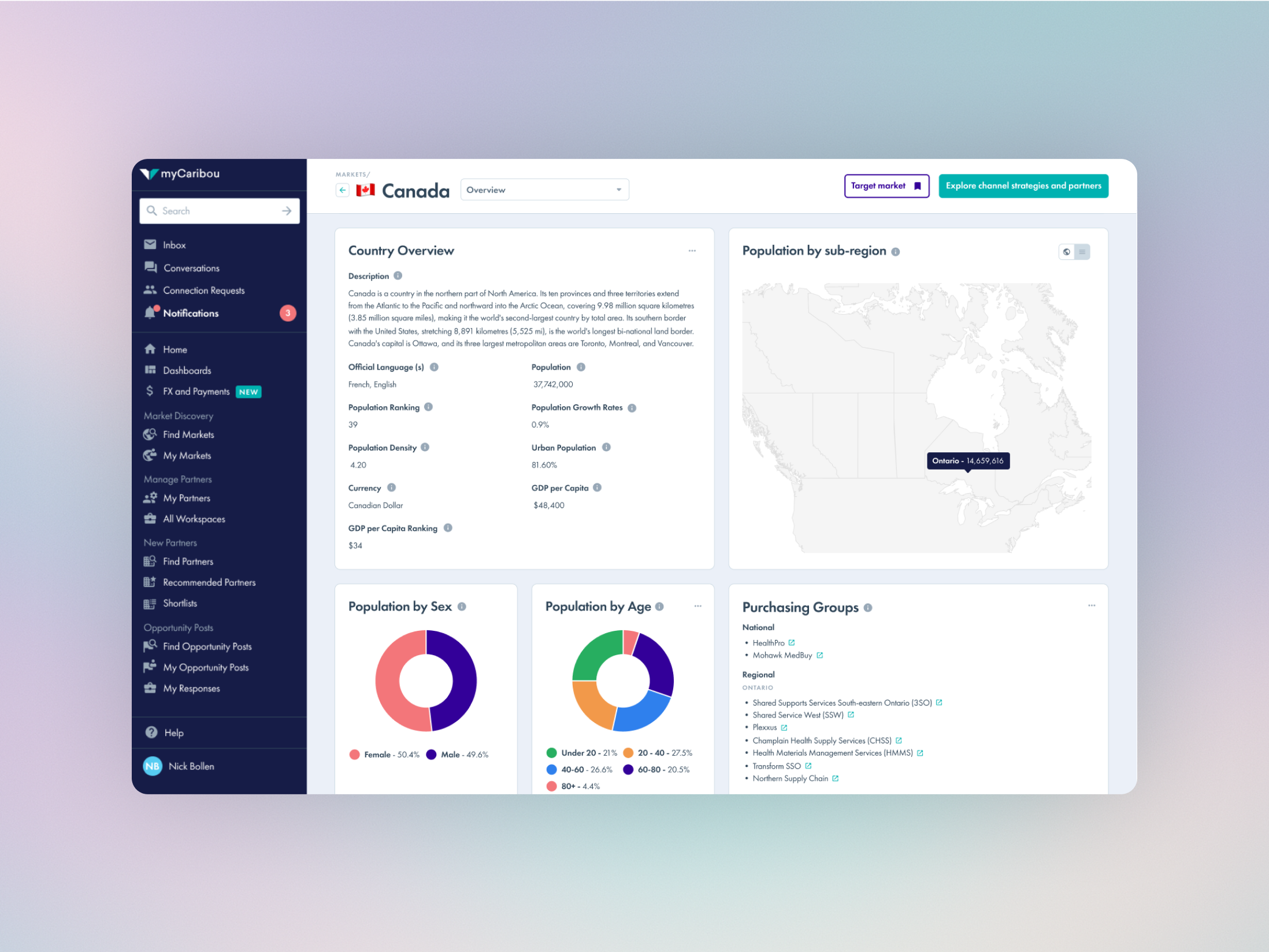
myCaribou is a B2B marketplace and partnership management platform for the $436 billion global medical device supply chain. Manufacturers, distributors, dealers, service companies — all trying to find and manage the right partners, mostly through spreadsheets and trade shows.
I joined before anything existed. No product, no team, no screens. My job was to figure out what it should be, build the systems to design it, and ship it.
Selected Work
Built the design system before building the product.
Before wireframes, I established a component library in Figma that became the single source of truth for a 12-person engineering team. Every button state, table component, and notification pattern defined and documented from the start. It was the infrastructure that let one designer keep pace with a full engineering team and absorb years of feature growth without fragmenting.
Generating image…
Validated the core flows with real users before writing a line of code.
I ran structured prototype testing with an advisory group of medical device veterans. The matchmaking wizard came out of those sessions significantly restructured. The original flow asked users to define their ideal partner in abstract terms. Testing showed they needed to work backwards from concrete criteria first. That insight changed the product's core interaction before engineering ever touched it.
Generating image…
Five user types, one coherent platform.
Manufacturers, Distributors, Dealers/Agents, Service and Repair Companies, and Platform Admins all live on the same platform with different workflows, different data needs, and different definitions of success. Role-conditional navigation, a shared component vocabulary, and a scalable information architecture meant adding a feature for one user type didn't break the experience for the other four.
Generating image…
Designed the most popular feature by reusing rather than reinventing.
Opportunity Posts, a way for companies to advertise partnership needs and receive inbound interest, became the platform's most-used feature shortly after launch. It was also one of the fastest to ship. The post creation flow reused existing form patterns. The browsing interface reused existing listing and filtering components. No net-new components were built. The right call was knowing what not to redesign.
Generating image…
Redesigned navigation as infrastructure, not a facelift.
As the platform grew, the original top navigation stopped working. Dropdown menus built for five items collapsed under fifteen. The redesign moved to side navigation, elevated notifications to first-class status, and replaced dropdowns with persistent hierarchical structure. Every surface in the product was affected. The change required cross-functional alignment before development started and updated component variants across the entire design system.
Generating image…
Integrated AI into a workflow, not onto a screen.
AI was added to the Opportunity Posts creation flow to reduce the effort of writing a high-quality post. Rather than a separate AI tool, it worked inside the existing flow: users drafted a rough description and the AI refined it. The interface kept users in control with clear edit affordances. Satisfaction scores improved after launch and the pattern was designed to extend to other high-effort content workflows without needing new design each time.
Generating image…
Outcomes
Zero to market as the sole designer, covering research, design system, UX, and UI
Served five distinct user archetypes on a single platform without fragmenting the codebase or the design system
Opportunity Posts became the platform's most popular feature, driving inbound sign-ups through LinkedIn with no net-new components
Three home screen iterations driven by usage data, each one improving onboarding completion and re-engagement
Navigation and IA redesign absorbed years of feature growth without a rebuild
Supported a 12-person engineering team as the only designer throughout
Full case study and selected screens available on request.
Let's Connect
I'm always open to discussing new projects, creative ideas, or opportunities to be part of your vision.